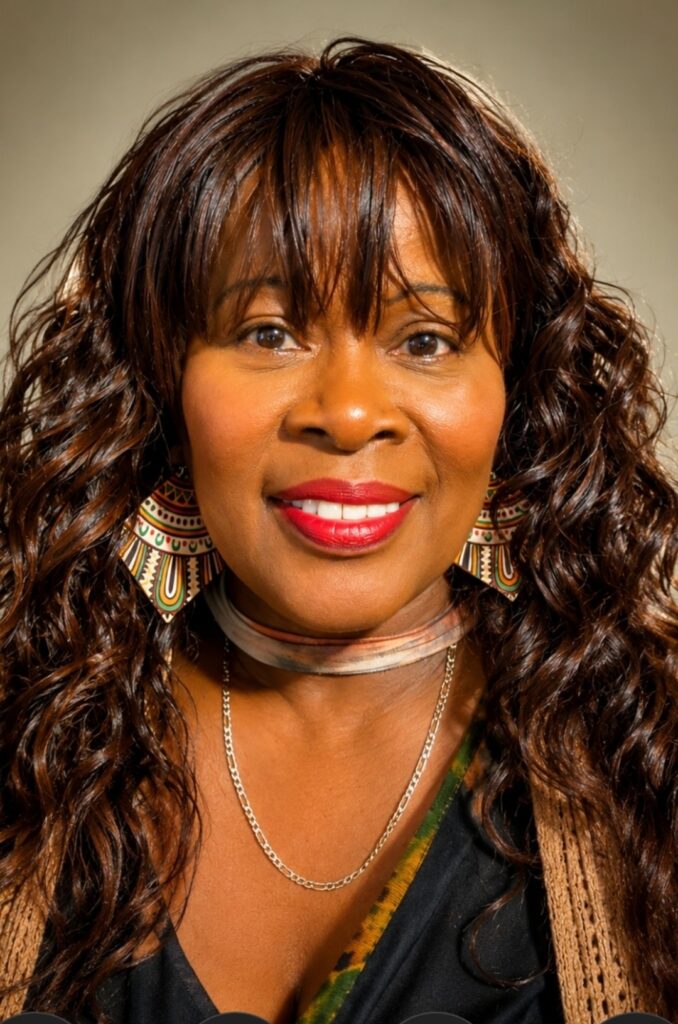

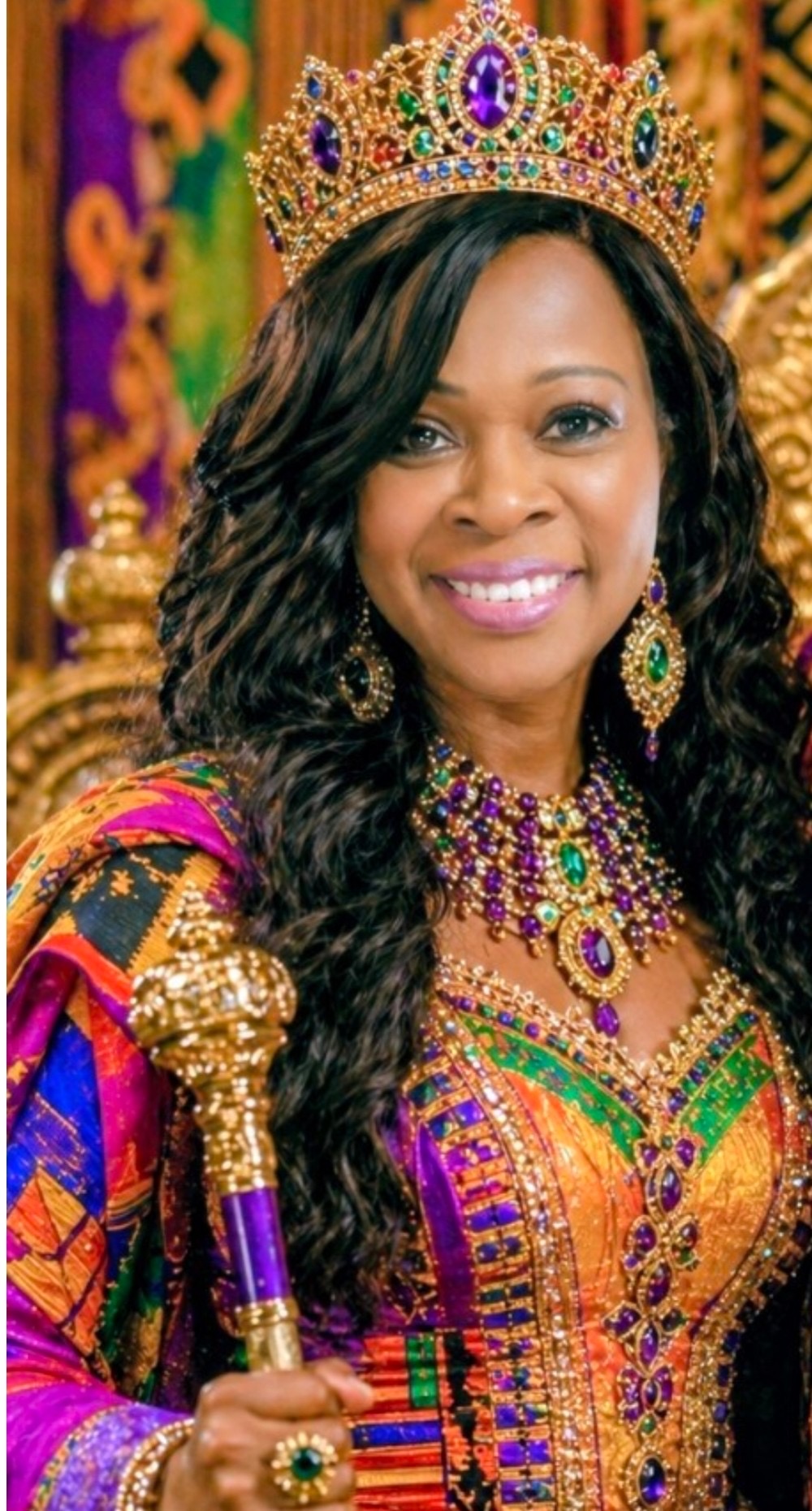
Building Stories, Opportunity and Legacy on Her Own Terms
Some people spend their lives trying to get a seat at somebody else’s table.
Barbara Myles decided to build her own.
Actress. Casting director. Filmmaker. Entrepreneur. Motivational speaker. U.S. Army veteran. Community advocate.
Her résumé crosses multiple industries, but the thread connecting them is simple: Barbara Myles believes in using your voice, controlling what you can control and creating opportunities instead of waiting for someone else to recognize your value.
That mindset did not begin in Hollywood.
It started in the first grade.
The Microphone Came Early
Myles remembers being only six years old when she began volunteering, reading aloud and standing in front of people.
She noticed something important: people enjoyed listening to her.
Instead of shrinking from the attention, she leaned into it.
That childhood willingness to stand up, speak and participate eventually helped shape the actress and motivational speaker she would become.
It is a small beginning with a much bigger lesson.
Sometimes purpose does not arrive with a business plan.
Sometimes it begins when a child raises a hand.
Sometimes the first opportunity is simply saying yes.
And decades later, Myles is still preaching that same philosophy.
Try something.
Volunteer.
Speak.
Show up.
Stop deciding something is not for you before you have even experienced it.
As she put it during our conversation: “How do you know? You’ve never done it.”
That sentence could almost serve as the blueprint for her career.
From Acting in Stories to Controlling the Story
Myles has appeared in more than 11 films, two television shows and stage productions.
But eventually, simply performing was not enough.
She wanted ownership.
She wanted the ability to decide what kind of material would carry her name.
That became one of the driving forces behind Empower United Productions.
Myles is clear that she does not believe everyone has to share her creative standards. Other filmmakers have the right to create their projects their way.
But when her name is attached to the production itself, she wants control over what she produces.
“I have the right to choose what I want.”
Her vision is to create films dealing with real-life issues while allowing room for people with different perspectives to exist in the same world.
She does not expect universal agreement.
In fact, she argues that disagreement is part of life.
People have different experiences, beliefs and perspectives — and she believes storytelling should be able to confront that reality.
That is what ownership changes.
When you are simply hired for a role, someone else owns the camera.
Someone else owns the script.
Someone else owns the final cut.
But when you become the producer, you begin controlling the narrative itself.
That distinction fits directly into the Kourage & Kulture philosophy:
Reclaim the Narrative. Build the Future.
Representation Has to Be More Than a Token Face
Myles also has strong opinions about representation in entertainment.
She believes mainstream productions have improved in some areas, but she still sees too many projects where Black performers are represented by only one or two characters while larger numbers of white actors fill the remaining roles.
Her response is not to build productions where everybody looks the same.
It is to create something broader.
Myles wants Black actors prominently represented while intentionally bringing together performers from multiple racial and cultural backgrounds.
Her vision includes Black, White, Latino, Asian, Native American and other performers working together.
Talent first. Diversity intentionally.
“I just like a mixture,” she explained. “I don’t want it to be all Black. I don’t want it to be all white. I don’t want it to be all of any race.”
For Myles, diversity is not simply about appearance.
She also views it as a way of widening the audience.
Different people bring different experiences, different networks and different viewers into a project.
In other words, representation can be cultural — but it can also make business sense.
Stop Complaining About the Community. Build Something in It.
One of the strongest moments of our conversation came when Myles spoke about Richmond County, North Carolina, the community that helped shape her.
She has little patience for people who say there is nothing to do in a small town while making no effort to participate in what is already happening around them.
Her own life tells a different story.
Richmond County was where she experienced a long list of firsts: her first management position, work as a dental assistant, a radio talk show, performing on stage and even owning a nightclub.
Doors opened — but Myles emphasizes that she also went looking for the doors.
She played softball.
She ran track.
She participated.
She tried things.
She refused to live a life built around school, home, television, sleep and repetition.
Her philosophy is almost economic:
You cannot continuously withdraw from a community you never deposit anything into.
“What can you expect to get out of a place or anything… if you’re not putting anything into it?” she asked.
That message goes far beyond Richmond County.
It applies to almost every overlooked community in America.
Everybody wants opportunity.
But somebody has to create the event.
Somebody has to start the business.
Somebody has to mentor the child.
Somebody has to produce the film.
Somebody has to rent the building.
Somebody has to create the job.
Why not you?
Business Without Trust Is Already Broken
For all of Myles’ optimism, she is equally serious about business.
Her rule is simple:
If she cannot trust you, she cannot build with you.
Myles revealed that she previously entered production with a business partner, but the relationship ultimately broke down.
The lesson she carried away from that experience was clear:
“You cannot be in business with someone you don’t trust.”
She eventually chose to move forward independently rather than continue building something with a person she could not rely on.
And her concern goes beyond her own money.
A producer makes promises to actors, crew members and everyone else depending on the project.
If leadership is dishonest or irresponsible, the damage spreads through the entire team.
Reputation spreads too.
People talk.
Talent remembers how it was treated.
And according to Myles, eventually an unreliable leader can lose the very team they hoped to build.
That might be one of the most important business lessons from the entire interview:
Talent can open a door.
Character determines who keeps walking through it with you.
Her Dream Is Not Just to Make Movies. It Is to Pay People.
Then Myles said something that revealed another level of her vision.
Her greatest joy, she explained, would be reaching the point where every person participating in one of her movies can be compensated.
Not only the stars.
Not only the director.
Everybody.
Even if somebody were simply sitting in an audience scene, she said she would love to be able to put something in that person’s hand for contributing.
That is where filmmaking becomes more than entertainment.
It becomes an economic ecosystem.
One production can create opportunities for actors, camera operators, makeup artists, editors, photographers, writers, caterers, wardrobe designers, musicians, locations, drivers, vendors and dozens of other people.
That is how culture and commerce begin working together.
And that is where Myles’ story becomes especially important.
She is not simply chasing visibility.
She wants to create circulation.
Barbara’s Three Moves for People Trying to Break Into Entertainment
When Kourage & Kulture asked what she would tell a young person with talent but little money, few connections and no roadmap into entertainment, Myles did not give some complicated Hollywood formula.
She gave practical advice.
First: Start using your voice.
If you’re still in school, volunteer to read. Speak publicly. Get involved in plays or activities. Confidence develops through repetition.
Second: Find people willing to develop you.
Myles recalled helping cast a film where only three of 21 people had acting experience. The other 18 had never acted before.
Her approach as a casting director is to coach people rather than immediately dismiss them for being inexperienced.
Third: Put yourself where opportunities can find you.
She recommended exploring casting platforms such as Actors Access and Backstage, watching for available roles and submitting yourself instead of waiting to be discovered.
But underneath all three steps sits one larger principle:
Do not quit before you begin.
Myles believes people need encouraging voices around them — friends and associates who will push them to try instead of immediately explaining why something cannot work.
“Don’t give up. Give it a shot,” she said.
Building Legacy Back Home
Myles’ next chapter continues to point toward Richmond County.
She discussed plans for a November 20 event at Cole Auditorium in Hamlet, North Carolina, designed to recognize accomplished people connected to the community.
Her vision includes celebrating people across journalism, sports, modeling, acting and other fields while also making space for local vendors and entrepreneurs.
That matters.
Because success often gets celebrated only after it leaves the neighborhood.
Myles is trying to bring some of that recognition back home.
To show another generation what has already come from Richmond County.
To remind people that extraordinary stories do not only begin in Atlanta, New York or Los Angeles.
Sometimes they start in a small North Carolina community.
Sometimes they begin with a six-year-old girl volunteering to read.
The Facts, Freestyled
Barbara Myles’ career does not fit neatly into one box.
And maybe that is exactly the point.
She has acted.
Served.
Spoken.
Cast talent.
Produced.
Owned businesses.
Worked in radio.
Built community projects.
And now she is using all those experiences to build something she can control.
Her story offers a message that reaches far beyond entertainment:
Participation creates possibility.
Ownership creates choices.
Trust creates teams.
Community requires contribution.
And sometimes the person waiting for somebody to give them an opportunity needs to become the person who creates one.
Barbara Myles is doing exactly that.
No permission needed.
FREE STYLING THE FACTS
Kourage & Kulture
Reclaim the Narrative. Build the Future.
🌐 kourageandkulture.com
📧 news@kourageandkulture.com