

The truth does not always arrive neatly packaged.
Sometimes the documents are incomplete. Sometimes the timeline is messy. Sometimes forty different clients can be connected to the desks of only two attorneys, and one misplaced document can become more than an administrative mistake.
That is where discipline enters the picture.
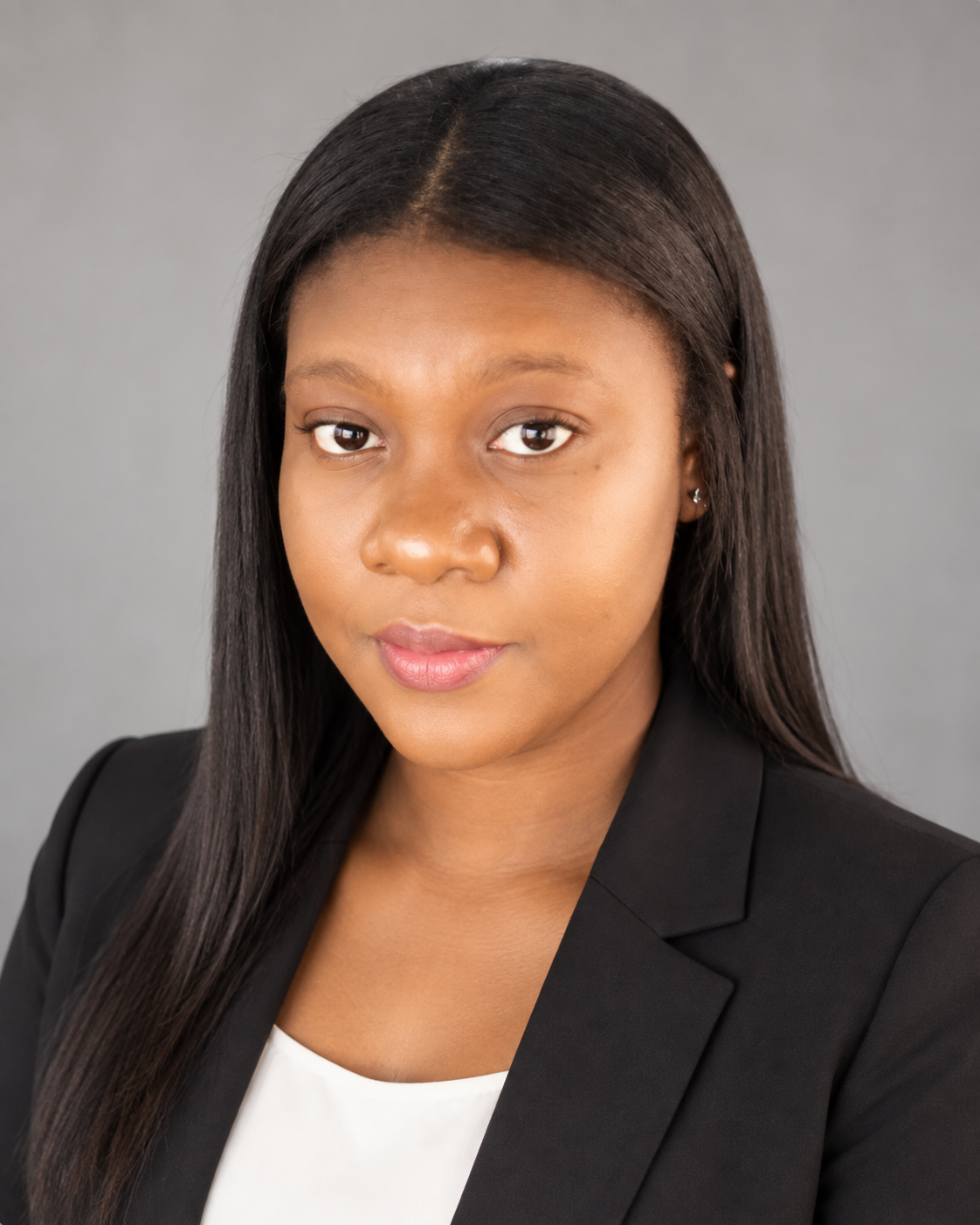
For Yanique Royal, currently a Legal Claims Coordinator for Frontdoor, working in the legal profession has reinforced something she understood long before entering the field: facts matter, but so does the ability to organize, understand and communicate them.
That combination makes Royal an appropriate voice for Free Styling the Facts, a Kourage & Kulture space built around looking beyond titles and surface-level narratives to examine the people, experiences and realities behind them.
Royal’s journey into law was not sparked by one dramatic life-changing event. There was no single courtroom experience, teacher or childhood crisis that suddenly determined her future.
Her direction developed gradually.
Growing up, Royal was unsure exactly what professional path she would eventually follow. She considered education. She considered fashion design. She enjoyed drawing. But underneath those different interests were several qualities that kept resurfacing: she loved to read, she loved to write, she enjoyed research, and she understood the power of storytelling.
The profession that eventually connected those qualities was law.
“The one thing I knew was that I wanted a career where I could genuinely make a difference in people’s lives,” Royal told Kourage & Kulture.
That desire became her foundation.
When Facts Become a Story
People often think about storytelling as something belonging exclusively to books, films, journalism or entertainment.
Royal sees it differently.
Legal work is also storytelling—but storytelling with consequences.
A person’s version of events must be connected to evidence. Documents must support assertions. Dates matter. Records matter. Language matters. The way facts are assembled can influence whether an argument is understood, ignored, accepted or challenged.
Royal said her interest in law grew from observing how significantly a case could depend upon how clearly its story was presented through evidence and the record.
She became especially interested in appellate work.
Appeals require a person to go backward through what has already happened, examine the record carefully, identify what matters and construct an argument without the luxury of simply inventing a more convenient narrative.
It requires reading.
It requires analysis.
It requires precision.
And it requires understanding that behind every legal document is a human being who may be deeply affected by what happens next.
“I saw how the legal system has the power to transform lives,” Royal said. “Law became a meaningful way to use truth, preparation and purpose to make a real and lasting impact on people.”
That statement captures an important distinction.
Knowing facts is one thing.
Knowing what to do with them is another.
Speaking the Future Before Seeing It
Even before Royal completely understood where her career would take her, she had already begun speaking a particular possibility over her life.
As a child, she repeatedly told herself:
“I’m going to be a lawyer.”
She did not yet possess the entire blueprint. She could not necessarily explain every step between where she was and where she wanted to go.
But the words remained.
“I’m going to be a lawyer. I’m going to be a lawyer.”
There is something significant about repeatedly giving language to a future before circumstances completely reflect it.
Royal eventually recognized that law provided a home for several parts of her personality that had been present all along: research, writing, storytelling and the desire to affect people’s lives.
Her educational journey would eventually include Delaware State University, where she completed her bachelor’s degree, as well as legal studies connected to Lewis University and the USC Gould School of Law.
Education gave her a foundation.
The workplace gave her reality.
And those two classrooms were not the same.
What School Cannot Completely Teach
Formal education can teach doctrine.
It can teach students how to structure an essay, research an issue, analyze a case and communicate an argument.
Royal credits her education with helping her develop those skills.
But professional life introduced another curriculum.
“Stress at work and stress at school are two different things,” she said.
In a classroom, students often encounter cases after the facts have already been organized. The important information has been selected. There is a textbook. There may even eventually be an answer key.
Real life does not operate that cleanly.
Professional legal environments may involve missing records, incomplete information, competing priorities, difficult clients, workplace personalities and constantly changing circumstances.
Royal also pointed to something many professional-development conversations avoid discussing openly: workplace politics.
Knowing the technical requirements of a job does not automatically teach someone how to navigate personalities, expectations, communication styles and institutional dynamics.
That education comes through experience.
“In practice, you have to gather the facts, adapt to what you know and learn how to navigate the environment you’re in,” Royal explained.
That is where theory becomes judgment.
The Work Behind the Lawyer
Television has conditioned people to associate the legal profession almost exclusively with attorneys standing before judges.
But legal systems do not operate through attorneys alone.
There are professionals behind the scenes responsible for helping organize the tremendous amount of information required to move legal matters forward.
Royal describes legal specialists as an important support system for attorneys and legal teams.
Their responsibilities can include drafting documents, conducting research, reviewing records, organizing files and helping maintain communication between attorneys and clients.
It is work that requires something less glamorous than television drama but equally essential:
accuracy.
Royal explained that a legal specialist may support more than one attorney at the same time.
If one attorney has twenty clients and another attorney has twenty clients, that specialist may suddenly be responsible for keeping information connected to forty different people properly organized.
One document cannot simply be “close enough.”
The correct client’s information must reach the correct attorney.
The correct materials must reach the correct judge.
Confidential information cannot wander into the wrong hands.
“You have to make sure you don’t accidentally send documents from one client to another client, or send the wrong client’s documents to a judge,” Royal said.
That reality reveals another dimension of legal work.
Organization is not simply about having a clean desk.
Organization can be an ethical responsibility.
Accuracy Is a Discipline
Discretion, fact-checking, multitasking and judgment are not abstract résumé words in Royal’s profession.
They are daily requirements.
Legal professionals routinely encounter sensitive information. Clients trust a legal team with details about their circumstances that may be personal, financial or otherwise confidential.
Handling that information requires maturity.
Royal described days that can become overwhelming quickly if the professional does not create structure.
Priorities have to be established. Files must remain organized. Information must be checked before it leaves the office.
The person doing the work must know when to move quickly and when slowing down is necessary.
It is a reminder that some of the most important work in any profession happens quietly.
Nobody applauds because the correct document went to the correct person.
But everyone notices when it does not.
The Additional Weight Black Women Carry
Royal’s conversation with Kourage & Kulture also moved beyond professional mechanics.
For Black women entering legal, corporate and other professional spaces, competence can sometimes be accompanied by an additional burden: being evaluated through other people’s assumptions.
Royal acknowledged that bias and judgment remain realities.
“As Black women, there is a lot of pressure on us and on how we present ourselves because we are judged a lot,” she said.
That judgment can affect how confidence is interpreted.
How a woman speaks.
How she dresses.
How assertive she appears.
Whether she is considered ambitious or “difficult.”
Whether mistakes are viewed as part of normal professional growth or treated as evidence that she never belonged in the room.
Royal’s response is not to surrender power to those perceptions.
“Being underestimated doesn’t necessarily mean you’re not capable,” she said. “It only shows what the other person cannot see.”
That distinction matters.
Someone else’s inability to recognize your ability is not necessarily evidence that the ability does not exist.
Protecting Confidence
Royal believes confidence must be intentionally protected.
“You have to speak truth over doubt,” she said.
That does not mean pretending weaknesses do not exist. Royal also emphasizes learning, recognizing personal limitations and continuing to improve.
Confidence without development can become ego.
Development without confidence can become paralysis.
The objective is to maintain both.
Royal also grounds that confidence deeply in her Christian faith.
“My walk with Jesus has helped me endure and build my confidence from within,” she said.
For her, faith is not separate from professional development. It has been part of how she has navigated school, work, uncertainty and personal growth.
When asked what young women should never surrender while building their careers, Royal did not hesitate.
“Their confidence,” she said. “They should never surrender their confidence—or their ambition. They should always keep going.”
That may be one of the simplest statements from the entire conversation.
It may also be one of the most important.
No Family Connections? Build Your Own Door
Professional industries can appear intimidating to people who do not come from families filled with attorneys, judges, executives or corporate professionals.
Royal understands that access matters.
But she does not believe the absence of inherited connections should become an excuse to stop moving.
Her advice for people attempting to enter legal or compliance work without family connections can be reduced to three practical moves.
First: Get experience.
Internships, volunteering, shadowing professionals and entry-level legal work can introduce someone to the environment while helping them build practical skills.
Second: Build a targeted network.
“People always say, ‘Network, network, network,’ and that really is a thing,” Royal said.
Networking should not simply mean collecting random contacts.
Royal recommends connecting intentionally with law offices, legal departments, judges and professionals already working in areas that align with the career being pursued.
Third: Start small and stay consistent.
Every position does not need to be the dream position.
Every opportunity does not need to carry the perfect title.
What matters is whether the opportunity allows someone to learn, increase their value and move closer to where they intend to go.
The Next Level
Royal has already accumulated education and practical professional experience, but she does not speak as though her journey is complete.
Her next objective remains connected to the declaration she made as a child.
Law school.
“My immediate priority is to continue growing my skills and knowledge in the legal field,” she said.
She views law school as another environment that can challenge her, deepen her legal foundation and move her closer to the professional future she has imagined for years.
The child who repeatedly said, “I’m going to be a lawyer,” has now become an adult building the credentials, experience and discipline required to make that statement increasingly tangible.
That is growth without pretending the destination has already been reached.
Kourage Is Strength. Kulture Is Experience.
Near the conclusion of the interview, Kourage & Kulture asked Royal to complete two phrases.
Kourage is…
“Strength,” Royal answered, before adding, “ambition.”
Kulture is…
“An experience.”
Two short answers.
But together, they provide an interesting summary of her story.
Ambition gave Royal something to pursue.
Strength helped her keep pursuing it.
Education provided information.
Experience taught her how that information operates when life becomes complicated.
And the legal profession continues teaching her that facts are rarely enough by themselves.
They must be found.
Checked.
Organized.
Protected.
Understood.
And communicated responsibly.
Free Styling the Facts
There is a difference between freestyling facts and Free Styling the Facts.
One means changing reality until it fits the story you want to tell.
The other means having the Kourage to examine reality closely enough to tell the story that is actually there.
Yanique Royal’s professional journey sits squarely in that distinction.
Her story is not built around pretending she knew every answer from the beginning. She did not.
It is not built around pretending formal education prepared her for every professional challenge. It did not.
It is not built around pretending Black women will never encounter bias. They will.
Her story is about continuing anyway.
It is about taking a childhood declaration and placing education beneath it.
Taking education and adding experience.
Taking experience and developing judgment.
Taking uncertainty and replacing it with preparation.
And taking other people’s inability to see your potential without allowing their blindness to become your identity.
Royal is still building.
Still learning.
Still networking.
Still writing her story.
Still moving toward law school.
And perhaps that is the fact worth highlighting most.
You do not have to already be standing at the destination to know that you are moving with purpose.
Sometimes the most powerful evidence of who you are becoming is found in the discipline with which you continue preparing for what comes next.
Because facts tell us where we are. Kourage determines what we do with them.