
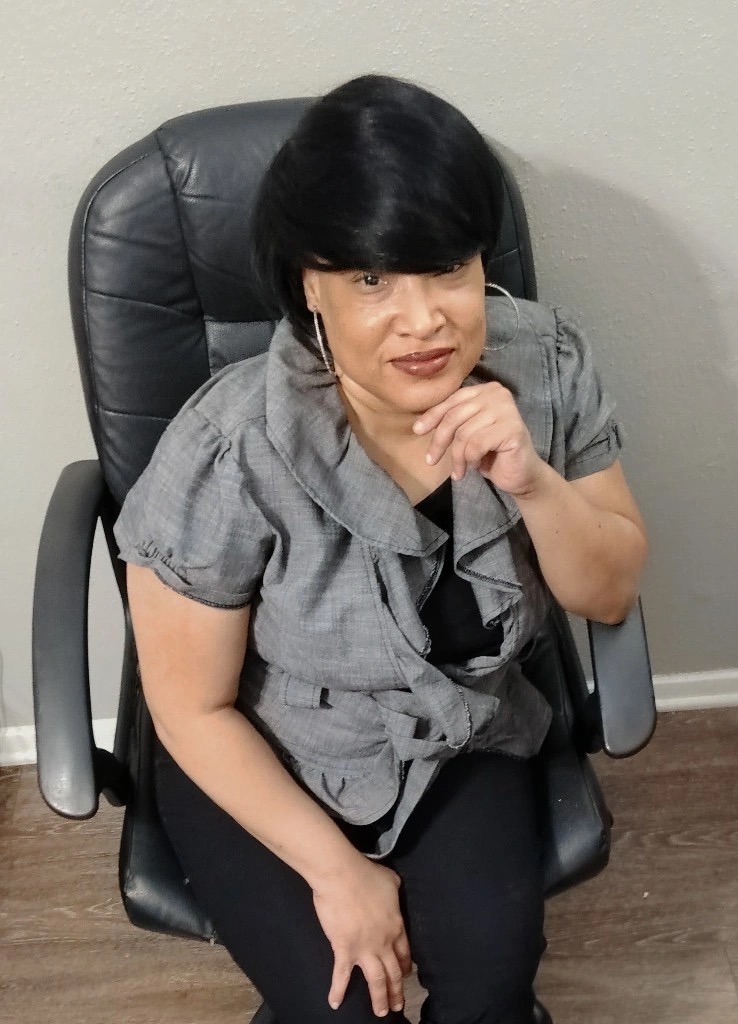
The doctoral candidate and entrepreneur discusses returning to education, leading with dignity, and building opportunities through knowledge.
There is a difference between reaching a point where you could stop and deciding that your journey is not finished.
Kim Petitt knows that difference.
During her October 16 conversation with Kourage & Kulture, Petitt shared how she returned to college in her thirties, continued through multiple degrees, and eventually began pursuing a doctorate. Her journey was not a straight line. It included interruptions, doubt, exhaustion, and moments when she questioned whether she could go any further.
But each completed chapter created a new possibility.
For Petitt, perseverance is rooted in faith. For the people listening, her story raises a broader question: How many ambitions have we abandoned because we convinced ourselves that the opportunity had already passed?
The Decision to Begin Again
Petitt earned her associate degree in her early thirties.
Before that accomplishment, she had started and stopped her education several times. Life interrupted her plans, and uncertainty made returning difficult.
She wondered whether she had the intellectual ability to complete what she had begun.
Then a message from her pastor helped change her perspective: if she did not like where she was, she could make a different decision.
Petitt returned to school intending to complete her associate degree and stop.
Instead, she pursued a bachelor’s degree.
Then a master’s.
And eventually, a doctorate.
Each achievement expanded what she believed was possible.
Her experience challenges the assumption that educational success must happen according to somebody else’s timetable. A person who returns to school later in life is not necessarily behind. They may be arriving with a clearer understanding of why the education matters.
The Doctorate Is Not the Finish Line Yet
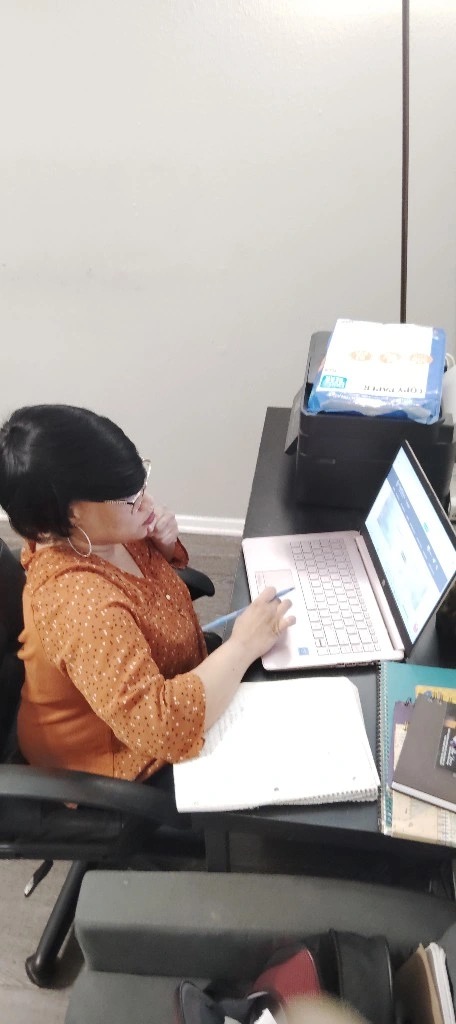
At the time of the interview, Petitt was in the final stages of her doctoral program, working through revisions.
She did not describe that process as easy.
There were days when exhaustion and pressure made her want to cry. Other days, she joked about wanting to throw her laptop out the window.
Yet she continued.
Her account is important because stories about achievement often skip the difficult middle. Audiences see the degree, the title, or the finished accomplishment without seeing the repeated decisions required to reach it.
Petitt’s doctorate was still in progress when she spoke with Kourage & Kulture. She was not claiming a completed credential. She was describing the discipline required to finish the work.
That distinction matters.
The achievement is not only in receiving recognition. It is also in developing the ability to remain committed when recognition has not yet arrived.
Leadership Begins With Human Dignity
Petitt’s discussion of leadership moved beyond personal achievement.
As a person living with a physical disability, she spoke about the impact of language that reduces people to labels.
She described how certain words had affected her confidence and self-image over time.
Her message to organizational leaders was straightforward: dignity must be demonstrated, not merely included in a mission statement.
“Intent does not erase impact,” she explained.
Petitt encouraged leaders to recognize harmful or outdated language, train employees in respectful communication, and establish organizational cultures where people are acknowledged as individuals.
She also emphasized that leaders set the example.
When disrespect becomes normal at the top, it can influence how an entire organization treats its employees and the people it serves.
But when leadership models respect, the organization has an opportunity to build trust.
For Kourage & Kulture, this conversation connects to a larger principle: a community cannot reach its full potential while dismissing the intelligence, ability, and contributions of its own people.
From Education to Economic Independence
Petitt is also applying her academic training to entrepreneurship.
During the interview, she discussed her freelance administrative research and data-screening business, which she developed to help small businesses and nonprofit organizations make better decisions.
She identified a common challenge: organizations often begin with passion and promising ideas but fail to research whether their programs address an actual community need.
A strong vision alone does not establish demand.
Petitt described the importance of examining demographics, identifying the intended audience, assessing existing programs, and measuring results.
Her approach encourages organizations to replace assumptions with evidence.
A nonprofit developing a community initiative, for example, should understand whom it intends to serve, what similar services already exist, and how success will be evaluated.
That groundwork can help protect limited resources.
Petitt also offered a practical lesson to aspiring entrepreneurs: identify a niche, understand the people you intend to serve, and develop the skills necessary to serve them well.
The principle extends beyond research consulting.
Ownership requires more than an idea. It requires preparation, knowledge, and the ability to make informed decisions.
Beyond the Labels We Inherit
Earlier in her journey, Petitt operated a Christian apparel business built around messages such as moving beyond limitations and fear.
She explained that the store had since closed, but the message behind it remained meaningful.
Her experience illustrates that an enterprise can end without ending the lessons its founder gained from building it.
The same applies to education, professional development, and personal growth.
A setback may change the route without eliminating the destination.
Petitt’s story is not a claim that faith alone removes every barrier. She openly described the challenges she continues to face.
What her experience demonstrates is the value of repeatedly choosing to pursue a goal even when confidence is incomplete.
Building a Legacy Through Knowledge
Throughout the conversation, Shabazz emphasized the responsibility to create pathways for the next generation.
Petitt’s journey offers a practical expression of that responsibility.
She returned to education after doubting herself. She continued when stopping would have been easier. She began translating what she learned into services intended to help other organizations succeed.
Her work connects individual development to collective opportunity.
When knowledge becomes a resource that others can use, achievement extends beyond the person who earned it.
Kim Petitt’s story reminds us that the future is not built solely by people who never experience limitations.
It is also built by people who refuse to let those limitations become the final definition of their lives.
KOURAGE & KULTURE
Reclaim the Narrative. Build the Future.
Freestyling the Facts — Where conversations become knowledge, knowledge becomes power, and power becomes progress.
Website: www.kourageandkulture.com
Contact: news@kourageandkulture.com