

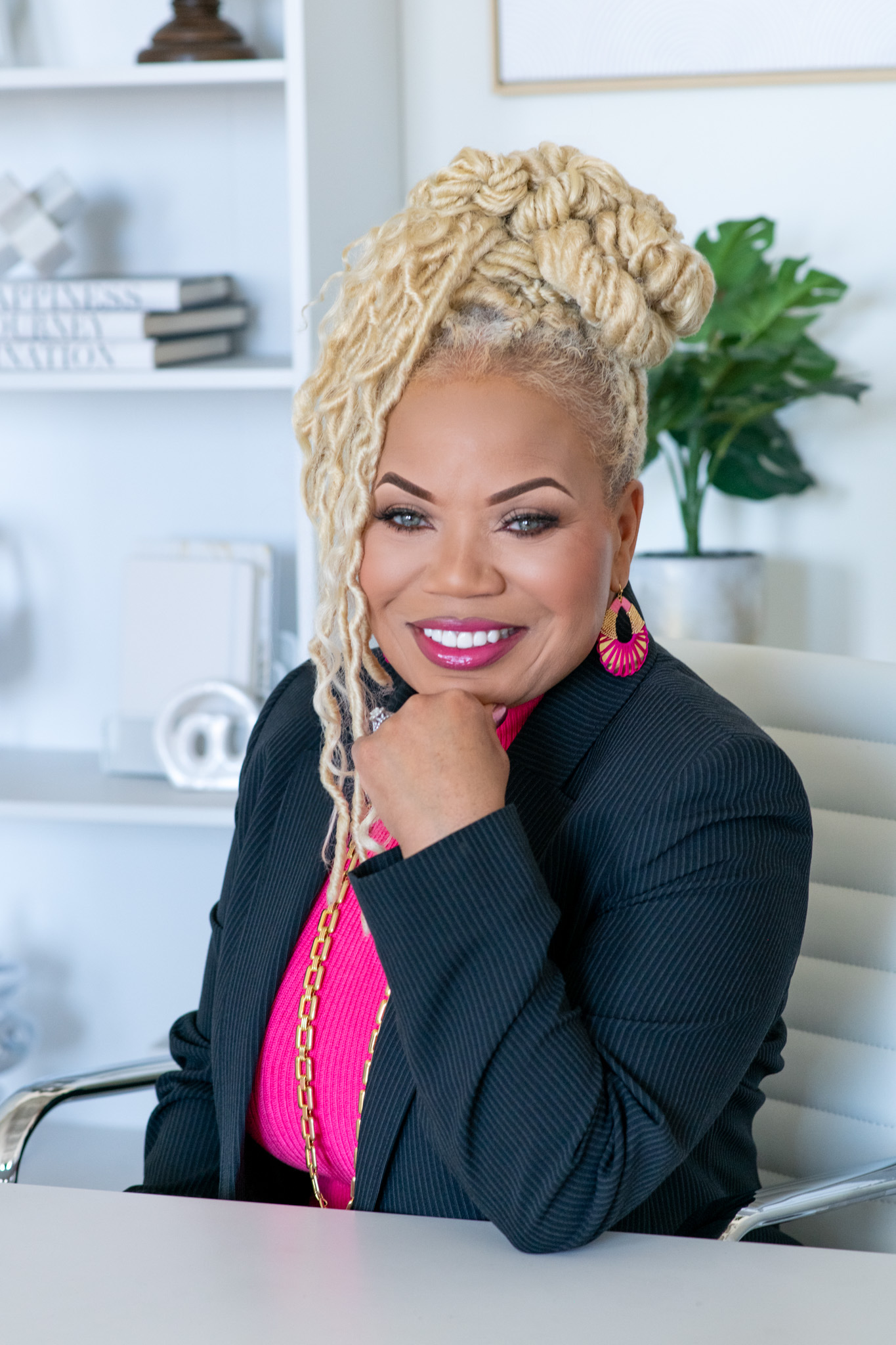
Building a Culture of Mental Wellness Before Crisis Hits
Mental wellness is more than responding to depression, trauma or crisis. Dr. Lia Knox says it is about intentionally creating lives, families, workplaces and communities where Black people have room to breathe, connect, recover—and thrive.
For generations, Black people have developed an extraordinary ability to survive.
We have survived poverty, racism, violence, displacement, incarceration, grief, economic instability and institutions that did not always protect or understand us.
But survival comes with a question we do not ask often enough: What happens when surviving becomes our normal way of living?
That question sat at the center of a Kourage & Kulture conversation with Dr. Lia Knox, PhD, LPC, founder and CEO of Knox Behavioral Health Solutions and co-founder of Black Space HQ.
Knox’s work focuses not simply on mental health, but what she calls mental wellness—an approach centered on intentionally caring for the mind and emotional life before everything falls apart.
For Kourage & Kulture’s November Mental Health Issue, that distinction matters. Too often our conversations begin after the breakdown: after the suicide attempt, after the arrest, after somebody loses the job, after the relationship collapses, after the child begins acting out, or after years of trauma finally become too heavy to hide.
Knox wants the conversation to begin much earlier.
“I don’t want our first conversation about mental wellness to happen when somebody is already in crisis.”
Mental Health Is Something We Have. Mental Wellness Is Something We Practice.
Knox makes a powerful distinction: everyone has mental health. Mental wellness, she explains, is about how intentionally we care for it.
That means being able to work, play, love, learn, socialize, communicate and experience life while developing healthier ways of managing emotions and reactions. It includes sleep, stress, boundaries, communication, recovery and relationships. It also includes recognizing when professional help is necessary.
Most importantly, wellness is not reserved for people with a diagnosis. A person does not have to be diagnosed with depression, anxiety, bipolar disorder or another mental-health condition before caring for their psychological and emotional life.
Knox describes this as a strength-centered approach rather than an illness-centered approach. That changes the entire conversation. Instead of asking only, “What is wrong with you?” we can begin asking: How are you sleeping? What are you carrying? Do you feel safe? Do you have people you can talk to? When was the last time you experienced peace? What do you need?
Those questions can happen long before an emergency.
Teach Mental Wellness Before Children Have to Recover From Trauma
One of Knox’s strongest points concerned children. Mental wellness education should not begin after a child experiences tragedy. It should begin almost immediately.
She talked about parents giving children affirmation, structure, calm environments, communication and emotional safety from the earliest stages of life. Children should know that they can talk. They should know their emotions have names.
Families pass down recipes, photographs, names and stories about who resembles which relative. But how often do families honestly discuss a history of depression, addiction, violence, suicidal thoughts, extreme isolation or other emotional struggles?
Knox argues that this knowledge belongs in the family conversation too. That does not mean labeling relatives or diagnosing people around the dinner table. It means ending the silence that leaves every generation believing it must figure everything out alone.
Healing can become an inheritance too.
You Cannot Self-Care Your Way Out of an Unhealthy System
Mental wellness does not stop at home. It follows us to work.
Knox has a warning for employers: free meditation apps, wellness days and occasional self-care workshops do not automatically create healthy workplaces. Organizations can offer massages, mindfulness sessions and employee assistance programs while still maintaining cultures shaped by poor leadership, excessive workloads, retaliation, bias, distrust and unhealthy communication.
That distinction is especially important for Black employees. Knox discussed the additional emotional labor that can come with code-switching, underrepresentation, stereotypes and repeatedly questioning whether a workplace interaction was simply interpersonal—or influenced by race.
A genuinely healthy workplace, she explained, does not mean everyone walks around happy all day. It means employees can communicate, disagree, ask questions, make mistakes, receive feedback and raise concerns without unnecessary psychological harm.
Mental wellness cannot only ask employees how well they are coping. Leadership must also ask: What are we requiring people to cope with?
“You can’t self-care your way out of an unhealthy system.”
Stop Asking Why We Don’t Go. Ask Whether We Feel Safe When We Arrive.
Access to mental-health care is another part of the problem. Through Black Space HQ, which Knox co-founded in Milwaukee, the goal has been to bring wellness directly into Black and Brown communities.
Knox challenged a common question: Why won’t Black people go to therapy? Before asking why somebody has not walked into a therapist’s office, we should examine whether we have created places where that person feels safe enough, respected enough and understood enough to receive help.
Barriers can include cost, insurance, transportation, time, distrust, previous negative healthcare experiences, stigma and a shortage of culturally responsive providers. Sometimes people are working two jobs while raising children. Sometimes they have no transportation. Sometimes they had a bad experience with a healthcare system and promised themselves they would never go back. Sometimes they simply do not know where to begin.
That is why Knox believes wellness has to travel—into churches, schools, workplaces, neighborhood spaces, media, community events and everyday conversations.
The first intervention does not always have to be therapy. Sometimes it is education. Sometimes it is somebody listening. Sometimes it is finally hearing: You are not the only person carrying this.
The Power of Belonging
There was another word underneath much of the conversation: belonging.
Knox spoke about the importance of community—the cousin, brother, sister, friend, elder, mentor, church member or trusted person who reminds us that our lives are connected.
Black life has historically been communal. Our families have extended beyond blood. We have aunties who are not technically aunties, cousins with no biological connection, neighbors who helped raise children, friends who became brothers and sisters, and elders who became second parents.
Knox believes that sense of belonging is deeply connected to mental wellness. The message is simple: We were never designed to carry everything by ourselves.
When Survival Mode Never Turns Off
Perhaps the most powerful section of the conversation came when Knox discussed survival mode.
Survival mode serves a purpose when danger is real. The problem comes when the danger ends—but the mind and body never receive the message.
A person can leave poverty and still fear financial collapse. A person can leave incarceration and still have a nervous system accustomed to constant alertness. A person can escape an abusive relationship and still anticipate danger. A person can become successful and still feel as though everything could disappear tomorrow.
Knox spoke personally about growing up in what many would call the projects and later earning advanced degrees, yet still having to recognize when old survival patterns show up.
Long-term survival mode, she explained, can appear as poor sleep, constant worry, irritability, exhaustion, difficulty concentrating, emotional numbness, overworking or an inability to enjoy accomplishments because the mind immediately jumps to the next problem.
You survive one week. Then another. Then another. Eventually, you can forget what living feels like.
Rest Is Not a Reward for Destroying Yourself
Knox offered practical steps that cost little or nothing: check in with yourself, ask what you are actually carrying today, take five or ten minutes to walk, listen to music, pray, sit in silence, stretch, breathe deeply, go outside, laugh and call somebody safe.
None of these practices magically erase poverty, racism, grief, trauma or economic pressure. They create small moments where the mind and body can receive another message: The emergency does not own every minute of my life.
And when those small practices are not enough, reach out for greater support—a trusted friend, family member, faith leader, support group, counselor or therapist. Sometimes another person can recognize that something has changed before you can see it yourself.
“We have become very good at surviving, but I want us to become just as intentional about living. Rest isn’t something you have to earn by completely exhausting yourself first.”

Black Men Deserve Emotional Language. Black Women Deserve to Put Down the Cape.
Knox challenged some of the images our culture has accepted. Black men need spaces where they can openly discuss emotions. Black women should not be expected to remain endlessly strong.
Entrepreneurs need mental-wellness conversations. Executives need them. Caregivers need them. Parents need them. Children need them. The successful need them. The struggling need them. The person everybody calls for help may need them most of all.
Mental wellness is not evidence that somebody is weak. It is part of being human.
Black Media Has a Responsibility Before the Tragedy
Toward the end of the interview, Knox issued a challenge directly to Black media—and therefore directly to Kourage & Kulture: tell these stories before tragedy happens.
Do not wait until suicide, violence, a celebrity breakdown or somebody’s worst moment becomes a headline. Black media can also tell stories about prevention, healing, healthy relationships, joy, boundaries and recovery.
Show Black men expressing emotion. Show Black women resting. Show families communicating. Show entrepreneurs protecting their minds while building businesses. Show young people learning emotional literacy before adulthood. Show people going to therapy before everything collapses. Show people getting better. Show people thriving.
Black people have always been storytellers. Our history traveled through voices, music, rhythm, families and community. Media is simply another drum. What we choose to beat across that drum matters.
From Survival to Living
There is courage in surviving. There is also courage in healing.
Courage in saying, “I’m tired.” Courage in asking for help. Courage in setting a boundary. Courage in going to therapy. Courage in calling somebody. Courage in crying. Courage in resting. Courage in teaching a child the emotional language you were never taught. Courage in telling your family, “We’re going to do something different.”
And courage in admitting that surviving cannot be our final destination.
Dr. Lia Knox’s message for our community is that mental wellness deserves the same intentional attention we give money, business, education, physical health and every other part of building a future.
We do not have to wait until somebody breaks. We can build systems of care now. We can talk now. We can listen now. We can check on each other now. We can teach our children now. We can rest now. We can seek support now.
Because the goal cannot simply be to produce another generation skilled at surviving difficult circumstances. The goal is to build generations that know how to live.
“Caring for your mind is not a weakness. You don’t have to wait for a crisis, you don’t have to have a diagnosis, and you don’t have to do it alone.”
ABOUT DR. LIA KNOX

Dr. Lia Knox is a licensed professional counselor, founder and CEO of Knox Behavioral Health Solutions, and co-founder of Black Space HQ. Her work focuses on mental wellness, culturally responsive care, organizational health, community wellness and making conversations about emotional health accessible to the people who need them.
NEED SUPPORT?
If you or someone you know in the United States is experiencing emotional distress, a mental-health crisis or suicidal thoughts, call or text 988 to reach the 988 Suicide & Crisis Lifeline. Support is available 24/7, and you do not have to be suicidal to contact the service.
Source: Kourage & Kulture interview with Dr. Lia Knox, September 16, 2026.
KOURAGE & KULTURE
Reclaim the Narrative. Build the Future.
kourageandkulture.com • news@kourageandkulture.com