
From Brooklyn to Kentucky, the former Wildcat captain is building more than a lifestyle brand. He is asking a question every community must answer: Who builds the culture—and who gets to own its future?
A jersey can carry a name. A brand can carry a logo. But what happens when the people who give a place its heartbeat finally see themselves in what gets celebrated—and in what gets built?
That was the deeper game when Ramel “Smooth” Bradley sat down with Kourage & Kulture. The former University of Kentucky basketball captain arrived with a story that moved from the hardwood to farms and fashion, from a Brooklyn grandmother’s mission to Kentucky barbershops, and from personal success to an urgent question of collective power.
Bradley is building God of the Hills™, a lifestyle brand rooted in heritage and community. Yet in conversation, the clothing itself was only the doorway. The real subject was the infrastructure beneath the culture: food, opportunity, relationships, business literacy and ownership.
The Two Homes That Built the Man
Brooklyn made Bradley. Kentucky, he says, strengthened what Brooklyn had already planted.
“I’m originally from Brooklyn,” he told Kourage & Kulture, describing it as the place holding a central piece of his heart. When asked what connected two places that can look worlds apart, he did not begin with geography, demographics or basketball statistics. He began with faith.
He recalled the trust his Kentucky teammates needed to compete, the encouragement of Big Blue Nation, and a fighting spirit supported by his faith in the Creator. The parallels he saw between Brooklyn and Kentucky were not about appearances. They were about people believing in one another through pressure.
His senior season was a turning point. As team captain, he experienced the highs and lows of competition and discovered that Kentucky was more than a temporary stop. After his playing career, he returned and began building businesses.
That return matters. He did not speak about community as a backdrop to personal achievement. He spoke about remaining present, contributing and making the place that supported him part of his future.
A Grandmother’s Mission Becomes a Business Vision
To understand why a basketball player would pursue agriculture, Bradley took the conversation home.
His grandmother, he said, started a mission through which the family helped feed and clothe people. That service taught him that food and clothing were not disconnected industries. They were necessities, and therefore possible vehicles for community stability.
Bradley explained that he studied agriculture and fashion at the University of Kentucky. When his grandmother developed diabetes and began losing her eyesight, her experience sharpened his desire to build a healthier, more sustainable food system—one that could create jobs while changing what people were able to eat.
This is where his story moves beyond the usual athlete-turned-entrepreneur headline. The motivation was not simply to start another company. It was to connect personal experience with a larger problem: how a community gets the things it needs, who participates in supplying them, and who benefits economically.
Food is not just a meal. Clothing is not just a fit. In Bradley’s telling, both can become places where a people rebuild capacity, opportunity and control.
Cats × Kings: Who Really Builds the Culture?
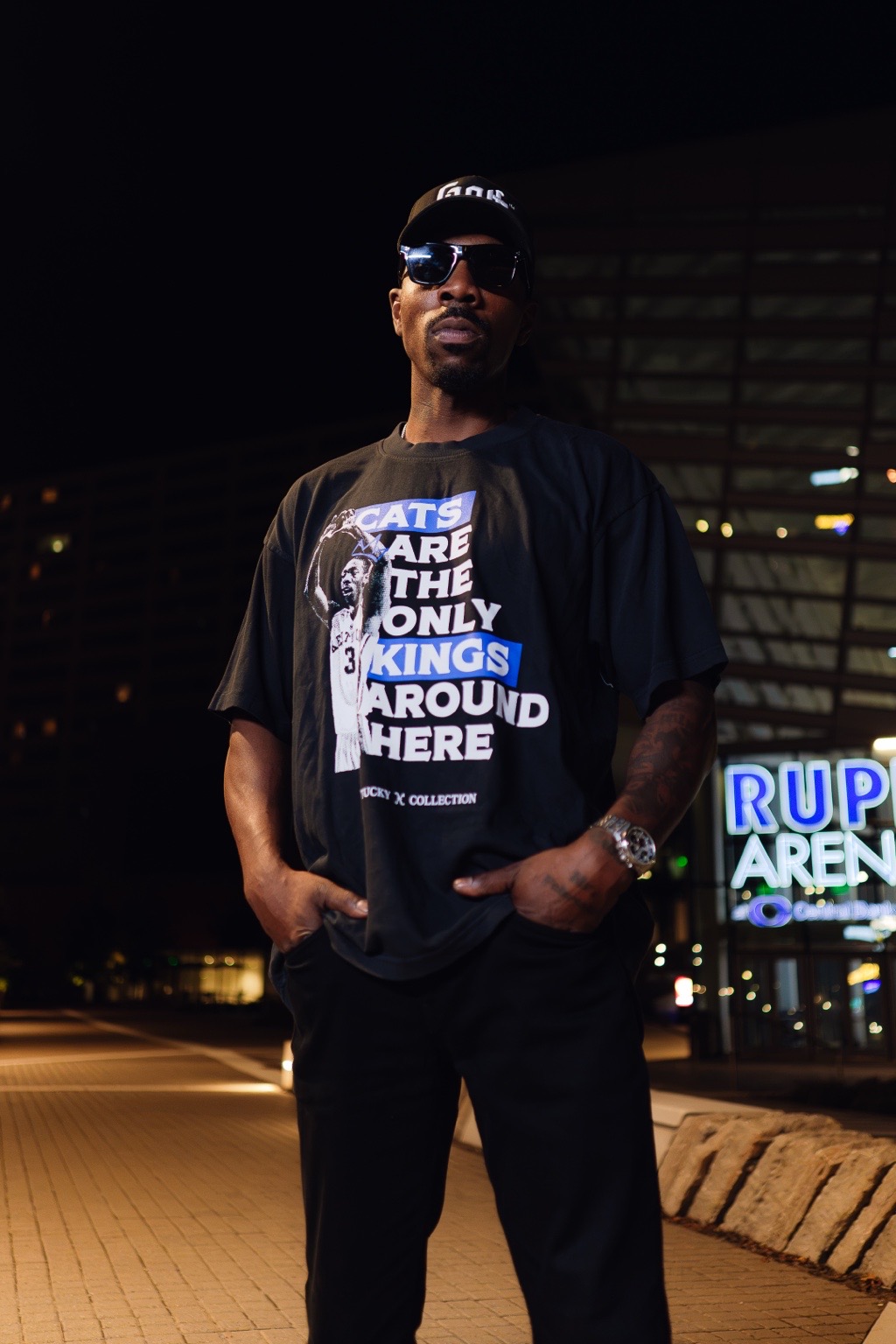
The God of the Hills Cats × Kings campaign challenges a narrow idea of who deserves representation in Kentucky’s identity.
Bradley emphasized that the Wildcat spirit he wants his clothing to honor reaches beyond people who attended the university. It includes the families and neighborhoods that built and sustained their communities; the supporters who helped him become a man far from home; people in Lexington and Louisville; and Black communities in Appalachia whose contributions, he said, can be overlooked.
That distinction gives the clothing its deeper meaning. A university may have its official merchandise, but a community also has its own history, labor, identity and pride. Bradley wants the people wearing God of the Hills to recognize themselves—not only a school or a sports program—in the story the garments tell.
Kourage & Kulture’s conversation returned to a shared principle: cultural recognition has to be connected to tangible power. Pride without participation can become another product someone else controls. Recognition tied to opportunity can become the beginning of an institution.
From Talent to an Ecosystem
Consider the artist who has the music but not the connections. The designer who has the eye but not the supply chain. The entrepreneur with the idea but no one to help turn it into a functioning business.
Bradley described meeting a Lexington rapper he called Fred C, whose work impressed him and whose story revealed how isolated independent talent can feel. His response was not limited to applause. He talked about connecting that artist with platforms to perform and a network that could help develop the missing parts of a sustainable business.
His point was simple: confidence is necessary, but confidence alone cannot replace access, relationships or know-how.
He argued for an ecosystem in which creatives, entrepreneurs and professionals support one another across the steps required to build something lasting. Rather than treating every neighbor as a competitor, people can identify the value each person brings and collaborate without surrendering their ambitions.
The goal is not dependency. It is a network of capable people building together while retaining their own value.
The Barbershop as a Community Institution
When the conversation shifted to God of the Hills’ community series with Floyd’s, Bradley gave one of the interview’s most revealing answers.
“The barbershop is a place where it’s like a therapy session for us,” he said.
He remembered his barber in Brooklyn as a mentor. The chair was a place for honest conversations, encouragement and guidance—sometimes the kind of conversation people could not have at home. That memory helped shape his vision for bringing Kentucky’s culture builders together.
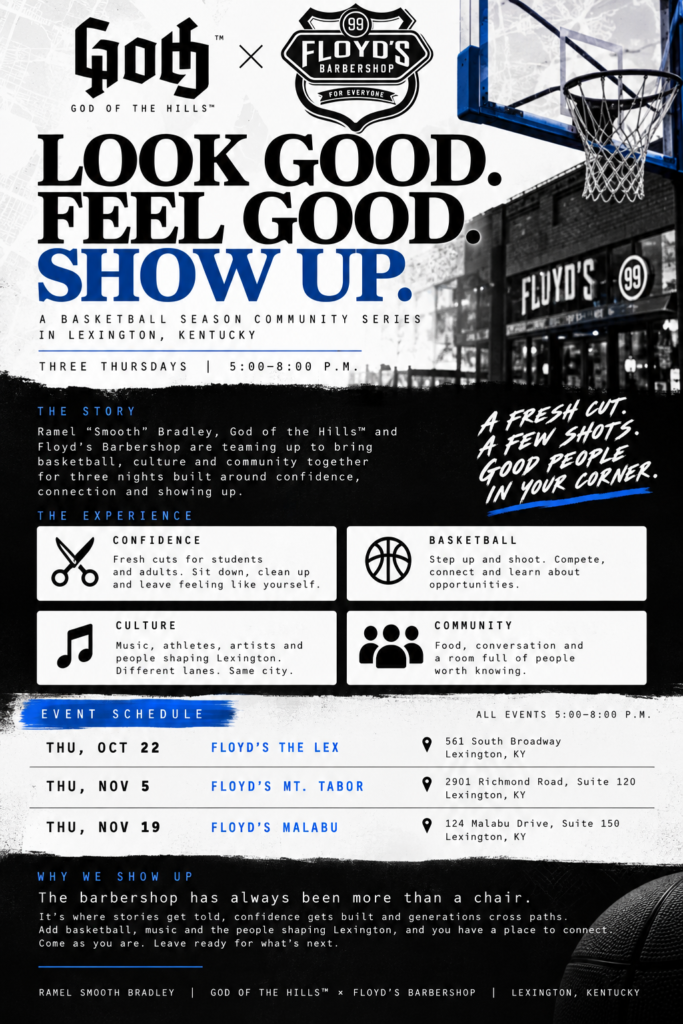
Bradley said the October 22 gathering connected designers, financial professionals, musical artists, athletes, alumni, parents and children. Alongside giveaways and opportunities involving training, its deeper purpose was networking and mutual support. Two more gatherings were planned for November 5 and November 19.
The deeper concept was striking: a fresh haircut can change how a person walks into a room, but genuine empowerment means also knowing who to call when an opportunity or obstacle arrives.
In that vision, the barbershop becomes more than a business selling a service. It becomes a meeting point for relationships, confidence, mentorship and local economic action.
The Three-Step Playbook: Start. Build. Protect.
Asked what he would tell a young creator with talent but very little money or access, Bradley gave advice grounded in execution rather than motivational slogans.
First: start with what you have. Identify your ability, find a problem worth solving, and take a first step. Waiting for ideal financing or perfect circumstances can become a permanent delay.
Second: develop the skills and relationships that make your work viable. Learn the business surrounding your talent. Be consistent. Be dependable. A strong reputation gives others a reason to trust you with opportunity.
Third: protect what you create. Know your costs, understand agreements and pay attention to confidentiality and ownership before sharing sensitive plans. Bradley described raising the possibility of a written confidentiality understanding when discussing ideas. Such arrangements must be assessed for the situation; the underlying lesson is to understand the terms before surrendering control.
His grandmother’s advice followed him into this practical teaching: “take the word with you.” Bradley interpreted that as both carrying spiritual grounding and becoming educated about what one is entering.
He condensed the method into a phrase worth remembering: “Step by step, step by step.”
That is not a promise of effortless wealth. It is a demand for preparation, discipline and continued action.
The Real Scoreboard
There is a reason this story belongs in Freestyling the Facts.
Bradley’s basketball career supplies the introduction, but it is not the destination. The more important question is what influence becomes after the applause. Can it help create healthier food systems? Can it develop independent artists? Can it bring people together across industries? Can the people who build the culture gain greater power over the businesses and opportunities that grow from it?
During the interview, Bradley insisted that support must include resources, not just good feelings. He called for communities to learn from viable business models, put those lessons to work and leave ego behind.
That is the difference between celebrating success and constructing a legacy.
Ramel “Smooth” Bradley is not asking audiences to forget the game that made his name familiar. He is showing what can happen when the discipline learned in that game is applied to community needs, enterprise and cultural representation.
The jersey was never the whole story. Neither is the logo.
The real victory is building something that can stand, serve and be passed forward.
About the Guest
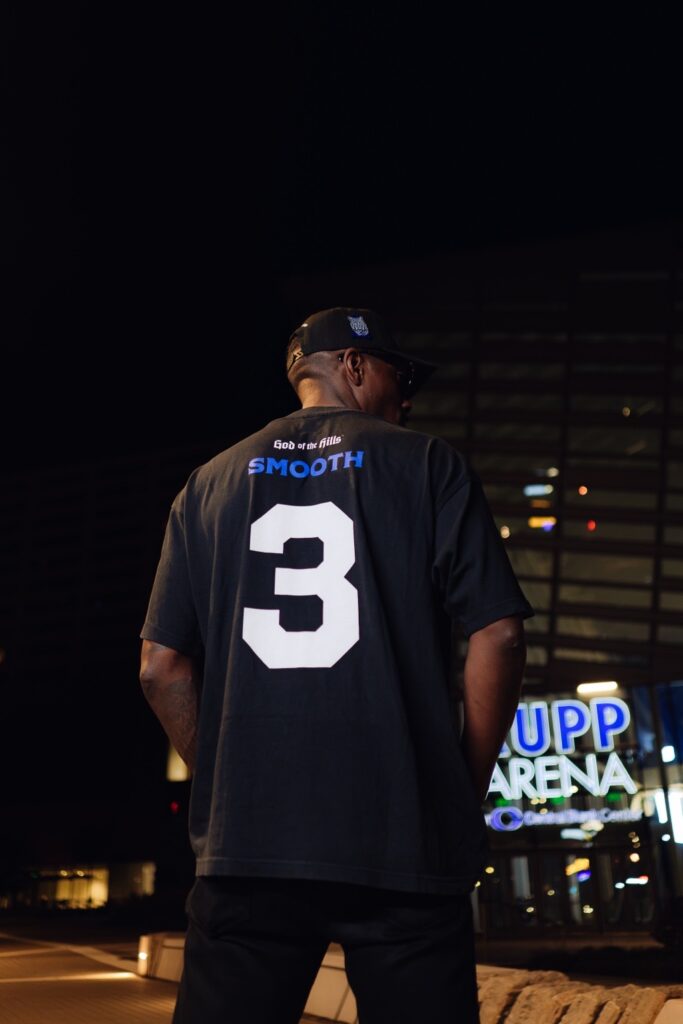
Ramel “Smooth” Bradley is a former University of Kentucky basketball captain and the founder of God of the Hills™, a Kentucky-rooted lifestyle brand. In this interview, he discussed its Cats × Kings campaign and community activity with Floyd’s.
Explore: https://godofthehills.com
Kourage & Kulture LLC
Reclaim the Narrative. Build the Future.