

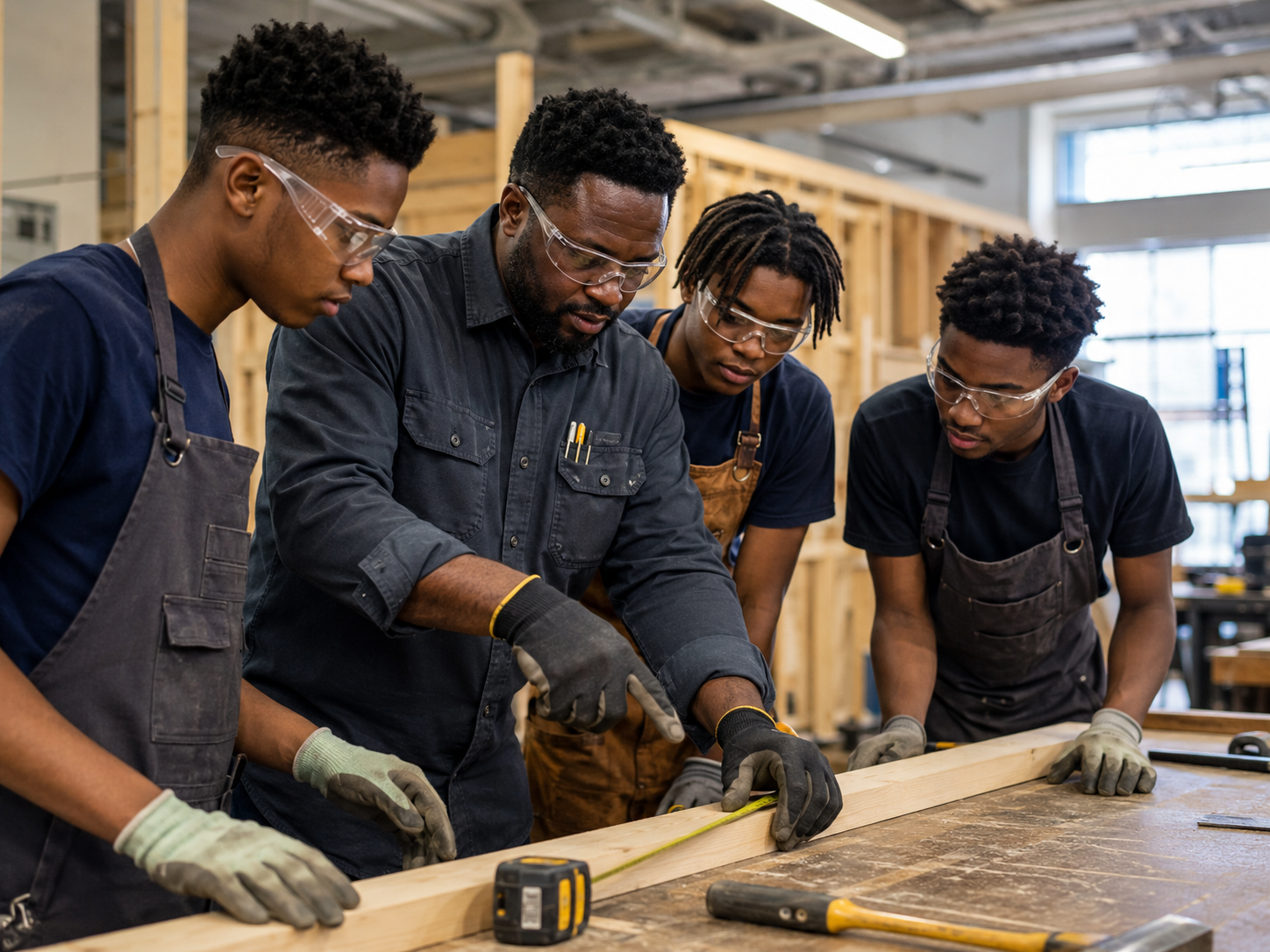
Trades, Certifications and Apprenticeships That Turn Practical Skill Into Income, Independence and Ownership
Written by Shabazz | Kourage & Kulture
LAW III — SUPPORT THE BUSINESS
A DEGREE IS NOT THE ONLY DOOR
College can be valuable. It is not the only path to economic power.
Electricians, welders, HVAC technicians, machinists, lineworkers, plumbers and other skilled workers build the systems every community depends on. Many of these careers can begin through apprenticeships, certifications or technical training instead of four years of tuition.
The real advantage is this:
A practical skill can become a paycheck, a business and eventually an asset.
Education should prepare young people to choose from multiple roads—not convince them only one road counts.
EARN WHILE YOU LEARN
An apprenticeship changes the equation because training and income happen at the same time.
Instead of paying only to learn, a worker can:
- Train under experienced professionals
- Earn wages while building skill
- Gain industry-recognized credentials
- Build references and job history
- Learn the business from the inside
- Move toward licensing or independent contracting
That matters.
Skill plus experience creates leverage faster than theory alone.
CREDENTIALS BECOME CURRENCY
The strongest technical credentials travel with the worker.
- OSHA safety certifications
- Commercial driver licenses
- Welding certifications
- HVAC credentials
- Electrical licensing
- IT and cybersecurity certifications
- Equipment operation credentials
These documents prove competence before a conversation even starts.
A recognized credential turns knowledge into portable economic value.
LEARN THE BUSINESS BEHIND THE TRADE
A skilled worker becomes more powerful when they understand the business around the skill.
- Pricing jobs correctly
- Reading contracts
- Creating estimates and invoices
- Tracking materials and labor
- Carrying proper insurance
- Managing taxes and records
- Building repeat customers
The trade creates income.
Business knowledge creates control.
MATCH THE SKILL TO THE MARKET
Not every credential leads to strong opportunity. Before choosing a program, study the market.
- Which trades are hiring locally?
- What licenses are required?
- What does entry-level pay look like?
- Who pays for training?
- Can the skill lead to self-employment?
- Is demand likely to remain strong?
Choose training with a destination—not just a certificate.
TURN SKILL INTO OWNERSHIP
The long game is not only getting hired. It is learning enough to eventually control the work.
A skilled worker can move from employee to:
- Independent contractor
- Crew leader
- Subcontractor
- Licensed business owner
- Trainer or mentor
- Property investor using their own trade knowledge
That progression matters because labor builds experience, but ownership builds equity.
VERIFY THE PROGRAM BEFORE YOU PAY
Training can build a future—or become expensive paperwork.
Before enrolling, check:
- Is the credential recognized by employers?
- Does the program prepare students for required licensing exams?
- What percentage of students actually finish?
- What jobs are graduates getting?
- Are local employers hiring from the program?
- Is financial aid creating unnecessary debt?
Never confuse enrollment with opportunity. Investigate the program before investing the money.
BUILD A PIPELINE, NOT A ONE-TIME JOB
The strongest trade strategy creates progression.
- Apprentice
- Certified worker
- Licensed professional
- Contractor
- Employer
- Owner
Each stage should increase skill, income and control.
The goal is not to stay useful to somebody else forever. The goal is to become capable of building something of your own.
SHOW THE OPTIONS EARLY
Young people should know these pathways before graduation—not after they are already lost, indebted or underemployed.
Schools and families should expose them to:
- Union apprenticeships
- Technical colleges
- Licensing requirements
- Employer-sponsored training
- Entrepreneurship opportunities
A teenager who understands the map can make a stronger decision than one choosing under pressure.
Career education should begin before the crisis.
LAW III — SUPPORT THE BUSINESS
If we want more Black-owned trade companies, we have to create customers for them.
Hire qualified Black electricians, plumbers, HVAC technicians, contractors, welders and other skilled professionals. Refer them. Pay them fairly. Help strong businesses become employers.
A trade becomes community power when the skill, customer and ownership stay connected.
SKILL SURVIVES THE CYCLE
Industries shift. Companies close. Technology changes.
But people will still need power, water, transportation, climate control, construction, repair and infrastructure.
That makes practical skill more than a job option.
It is economic resilience.
Teach the next generation to carry something no recession, algorithm or employer can easily take away:
the ability to solve a real problem with their own hands and mind.