

How Phillicia Yvette Crawford-Lee Is Carrying a Family Legacy of Education, Civil Rights and Community Service into the Next Generation
BY SHABAZZ | KOURAGE & KULTURE
FOUR LAW FOCUS: PROTECT THE LEGACY
Before Phillicia Yvette Crawford-Lee ever organized a youth oratory competition, supported Black college students or fought to keep community history alive, she was a Black child riding a bus across Austin, Texas.
She had spent her elementary years in an all-Black school, surrounded largely by Black teachers. Then, after sixth grade, she was bused from East Austin to a predominantly white school in North Austin as part of the city’s desegregation effort.
The building was different. The teachers were different. The faces in the classrooms were different.
“To go to an all-white school and see white kids and more white instructors or teachers—that was shocking,” Crawford-Lee told Kourage & Kulture.
That experience became part of an educational journey spanning generations: from segregated Black classrooms to forced integration; from a historic court victory opening a Texas university to Black students; from the disappearance of Black neighborhoods to the deliberate preparation of Black children for leadership.
For Crawford-Lee, education has never been limited to what happens inside a classroom. It is the transfer of memory, courage and responsibility from one generation to the next.
Education is how a people remember who they are. Education is how a community protects what it built. Education is how children learn that they possess the power to change history—and become part of it themselves.
A native of Austin, Crawford-Lee was raised by parents who believed deeply in civil rights and community service.
Her mother was an elementary-school music teacher and served as secretary of Austin’s local NAACP. Her father, attorney J. Phillip Crawford, served as the organization’s local attorney while building a career in law and public service.
“My parents were my mentors,” Crawford-Lee said.
Her family participated in Black organizations during a time when African Americans were frequently excluded from white institutions. Those organizations were not simply social clubs. They were spaces where Black professionals, families and activists organized, protected one another and created opportunities that the larger society denied them.
Inside that environment, Crawford-Lee and her younger brother received a clear instruction from their parents: “We needed to give back to the community that we were raised in.”
That lesson became the foundation of Crawford-Lee’s life. Service was not presented as a favor to be performed when convenient. It was an obligation attached to opportunity. If a door opened for you, you carried a responsibility to hold it open for those coming behind you.
Crossing the Color Line at School
Crawford-Lee began her education in an all-Black elementary school that served children from kindergarten through sixth grade. Most of her teachers were Black, although she remembers having some white instructors.
After sixth grade, she was among the Black children bused from East Austin to a predominantly white school in North Austin. The Black and Latino children from her neighborhood rode together. They entered a school where the culture and balance of power were unlike anything Crawford-Lee had previously experienced.
Integration gave Black students access to institutions that had excluded them, but it often came with another loss: separation from Black educators and neighborhood schools that understood their culture, families and community.
Crawford-Lee continued through a predominantly white high school, where she was fortunate to have a Black principal. After graduating, she attended Texas Tech University in Lubbock.
Her parents encouraged her to leave Austin because they wanted her to become independent. She completed college in four years, earning a Bachelor of Arts in telecommunications with a concentration in radio and television. She also worked as a DJ at the university’s radio station throughout her four years on campus.
Although Crawford-Lee did not ultimately pursue broadcasting as a profession, the experience helped develop a voice she would later use in service of young people, education and Black history.
The Case That Opened a University
“He took the university to court and won the case.”
The Crawford family’s connection to education was not merely personal. It became part of Texas civil-rights history.
J. Phillip Crawford represented Dana Jean Smith, a young Black graduate of Austin’s original L.C. Anderson High School who sought admission to the institution now known as Texas State University. Smith was denied admission because Black students were not permitted to attend.
Her family turned to J. Phillip Crawford for representation. He challenged the university in court—and won.
“He took the university to court and won the case,” Crawford-Lee recalled. “It was a groundbreaking decision where it helped to open doors for not only African Americans, but minorities in general.”
The victory in Dana Jean Smith’s case helped break the university’s racial barrier and opened the way for its first Black students to register. That courtroom victory was larger than one woman’s admission. It challenged the power of an institution to decide that the color of a student’s skin made her unworthy of entering a classroom.
According to Crawford-Lee, her father later became the first African American appointed to serve as an assistant attorney general for the State of Texas. He worked on federal matters that required him to travel to Washington, D.C. He also served as director of Gary Job Corps in San Marcos before entering private practice as a criminal attorney.
“So, I do have kind of like a legacy,” Crawford-Lee said.
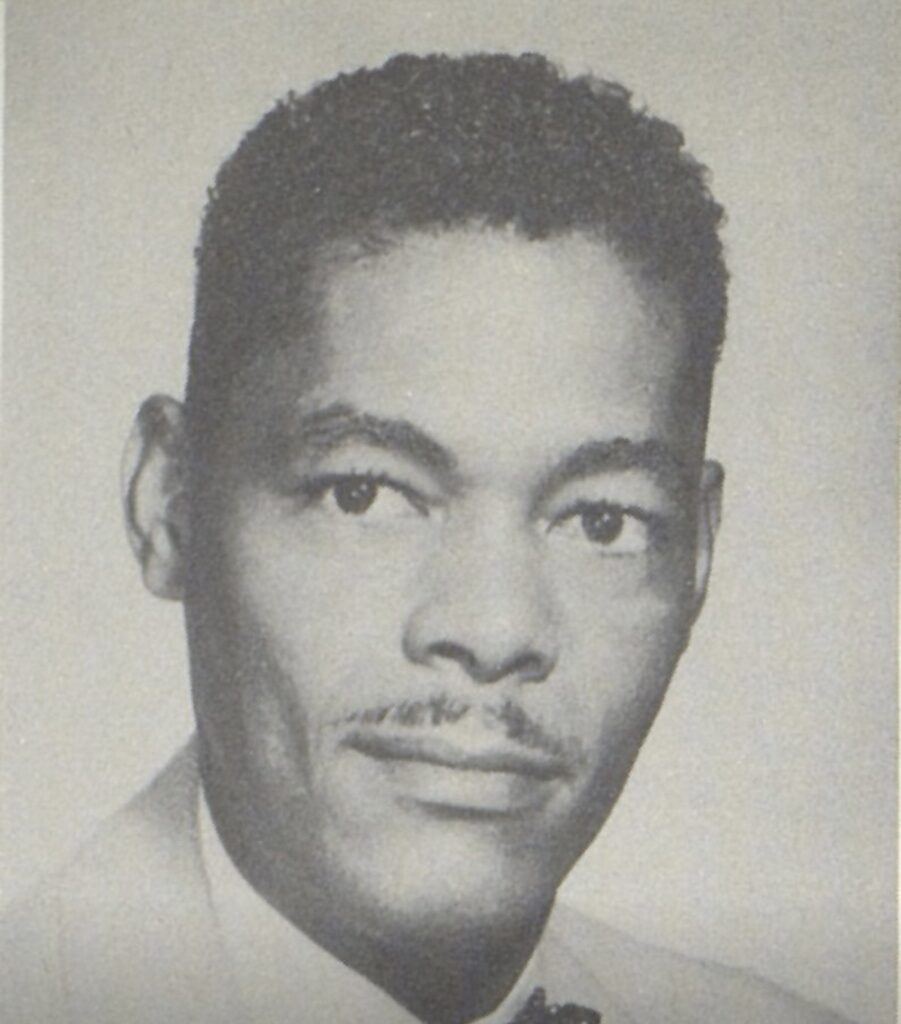
It is more than kind of a legacy. It is a direct line connecting civil-rights advocacy, access to education and service to the community. J. Phillip Crawford used the law as an instrument for liberation. His daughter would carry that work forward through education, youth development and the preservation of history.
Helping Students Who Look Like Us
Today, Crawford-Lee works in campus management at Austin Community College. She does not identify herself as a teacher or academic adviser. Her work helps facilitate the campus for students, faculty, staff and visitors.
Still, she pays special attention to Black students who may need direction or support.
“I try to assist students who look like us—students who need help,” she said.
Crawford-Lee works at Highland Campus, which she considers the hub of the Austin Community College District. Before the location became a college campus, it was Highland Mall. Before the mall, the land was associated with the historic St. John’s Industrial Institute and Orphanage, which served Black children.
That history gives the campus a deeper meaning. Land holds memory. A property may change names, ownership and purpose, but its history does not disappear simply because a new building stands upon it.
Crawford-Lee also supports efforts to expose Black students to mentors who understand their cultural experiences.
“I try to help bring or find mentors who look like us,” she explained. “Our African American culture is very unique.”
Representation is not about placing a Black face in a room for appearance’s sake. A mentor who understands a young person’s background, language, pressures and community may be able to reach that student in a way an institution alone cannot.
Her “Baby”: The MLK Youth Oratory Competition
“These children are very much aware.”
For approximately 24 years, Crawford-Lee has served with the Austin Area Heritage Council, the volunteer organization responsible for coordinating Austin’s annual Martin Luther King Jr. celebrations and march.
For roughly 22 of those years, she has led the council’s MLK Youth Oratory Competition.
“That is my baby,” she said.
The competition invites students in grades four through six to study Dr. King’s life and answer a serious question: If Dr. King were alive today, what would you talk to him about?
The question requires more than repeating a few famous lines. Students must research who King was, what he fought for, what work he left unfinished and how his mission connects to the conditions they see today.
“What it teaches the children to do is research what Dr. King was all about, what he did and what he was planning on doing,” Crawford-Lee explained.
The competition develops research, writing, memorization and public-speaking skills. First-, second- and third-place winners receive cash awards. The first-place winner is also invited to speak during additional Heritage Council events, including Austin’s MLK celebration at the Texas State Capitol.
When Crawford-Lee first began leading the competition, she questioned how much elementary-age children truly understood about society.
“I was thinking, these are nothing but babies. They don’t know what’s going on,” she admitted. “But these children are very much aware.”
Their speeches proved that young people are watching, listening and forming conclusions about the world adults have created for them.
“They know what changes need to be made in order to make this a better country and world.”
Adults often say children are the future while denying them opportunities to speak in the present. Crawford-Lee’s work gives them a platform now.
“They’re going to be the lawmakers,” she said. “They’re going to be making decisions on what’s going to happen in this country and in the world.”
Let Them Experience the Future
Crawford-Lee deliberately brought the oratory competition to Austin Community College because she wanted children to experience a college environment before they were old enough to apply.
“I want the children to know what it’s like to be on an institution of higher learning,” she said. “I want them to get on that thought path of, ‘Okay, this is what college is like.’”
Through campus collaborations, students can tour educational facilities and explore careers in fields such as culinary arts, engineering, computer-aided design and public safety.
“Think about what you want to do,” Crawford-Lee tells them. “Know what you want to do before you even make it to high school.”
Early exposure matters. A child cannot prepare for an opportunity they do not know exists. Telling young people to become successful is not enough. They need to see different careers, understand educational pathways, meet people working in those fields and learn what steps are required to enter them.
Crawford-Lee also emphasizes community college as an affordable and practical route into higher education. Students can complete core courses, earn a two-year associate degree or transfer to a four-year university while potentially reducing the overall cost of their education.
Her approach is grounded in reality: liberation requires more than inspiration. Young people need access, information, mentorship and an achievable plan.
When Schools Do Not Teach Enough
“We need to continue to teach our children their history.”
Crawford-Lee’s concern is not limited to whether Black children attend school. She is equally concerned about what they are being taught—and what is being left out.
“We need to keep our children informed of what’s going on—basically, Black history,” she said. “They do not teach that in school.”
That concern became personal when she invited her then-13-year-old granddaughter to participate in Austin’s MLK March. When Crawford-Lee asked what she knew about Dr. King, she was surprised by how little her granddaughter had learned.
“This individual fought for us to have the rights that we have now,” Crawford-Lee told her. “To be able to live where we live, to be able to work where we work and to have the things that we were not able to have back then.”
Like many teenagers, her granddaughter was not eager to spend her day marching. Crawford-Lee did not accept reluctance as the final answer.
“You’re going,” she told her, “because you need to learn about this.”
That exchange carries a lesson for every Black family. We cannot place the entire responsibility for our children’s historical education in the hands of school systems that may minimize, restrict or omit the truth. Parents, grandparents, elders, churches, cultural organizations and independent Black media must also teach.
“We need to continue to teach our children their history,” Crawford-Lee said, “because they may be a part of making the changes and become history themselves.”
Black history is not a collection of dead names and distant dates. It is a record of decisions, sacrifices and victories that shape the rights we possess today. It is also unfinished.
When a Community Is Priced Out of Its Own History
“It hurts because we built that.”
Crawford-Lee has watched East Austin—the community her family helped build and serve—transform under the pressure of gentrification.
Black families were once restricted and pushed into East Austin through segregation. They built homes, churches, businesses and cultural institutions there. After generations of creating community under hostile conditions, many descendants of those families are now being priced out.
Crawford-Lee eventually had to sell her parents’ home because the property taxes became too expensive.
“That was the last thing of my parents that I had left of them, because they’re both deceased,” she said.
The loss was more than financial. The house represented family memory, history and physical ownership in a neighborhood shaped by Black labor and sacrifice.
“They’re coming back to take over our community, which we created for us,” she said. “It hurts because we built that.”
What Crawford-Lee sees in Austin is also happening in Black communities across the country. Neighborhoods once neglected by outside investors suddenly become valuable. Property taxes and housing costs rise. Longtime residents leave or are forced out. The culture that made the neighborhood meaningful is then repackaged for people who did not build it.
Crawford-Lee now returns to East Austin primarily to worship at what she described as Austin’s only Black Catholic church.
“We bring more soul—part of our culture—into the Mass,” she said. “I couldn’t get the true feeling of being able to worship who I am without my culture and how I was raised.”
Her testimony connects education to land and ownership. If children do not know who built their communities, they may not understand what is being taken when those communities disappear. Education must prepare Black children not only to obtain employment, but also to protect land, institutions, culture and community power.
She Cannot Walk Away
After more than two decades of leading the MLK Youth Oratory Competition, Crawford-Lee has considered stepping down. Each time, she returns to the same truth: the work has become part of her.
“I’ve said I was going to resign and stop doing it,” she said, “but I feel like that is a part of me. If I stop doing it, I will feel like something is missing.”
That feeling is the inheritance her parents left behind. Her mother educated children and served the civil-rights movement. Her father used the law to tear down a racial barrier in higher education. Crawford-Lee now helps young people discover their voices, enter educational spaces and understand the history that made their opportunities possible.
J. Phillip Crawford helped open a university’s doors. Phillicia Yvette Crawford-Lee is making sure the next generation knows why those doors are open—and possesses the confidence to walk through them.
Her life reminds us that education is not simply the pursuit of a diploma. It is learning the truth behind the freedoms we exercise. It is placing Black mentors before Black students. It is teaching children to research, question, speak and lead. It is preserving the history embedded in our neighborhoods. It is transferring knowledge before silence, neglect or displacement erases it.
Most importantly, education prepares young people to become more than spectators to history.
“They may make some great accomplishment or become something much bigger than anyone has ever expected,” Crawford-Lee said. “They will be a part of history.”
That is the work she inherited. And now, through every child she encourages to study, speak and lead, she is passing it forward.

Watch the Full Interview
The written word preserves the story, but hearing history from the person who lived it carries a power of its own.
Watch Kourage & Kulture’s full interview with Phillicia Yvette Crawford-Lee as she discusses education, civil rights, Black history, youth leadership and the responsibility to serve future generations.